Archive for the ‘ Photography Trips ’ Category

Waikiki Beach Twilight
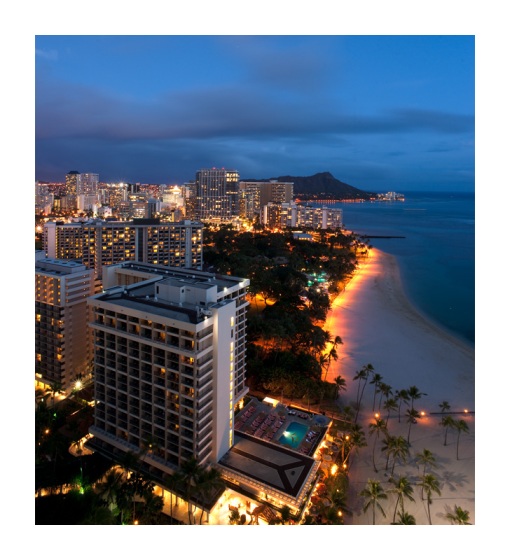
Image 1: Waikiki Beach and downtown Honolulu. Shot with a Sony a900 and a Sony SAL 20mm. Image exposed at ISO 100 at f16 for 60 seconds.
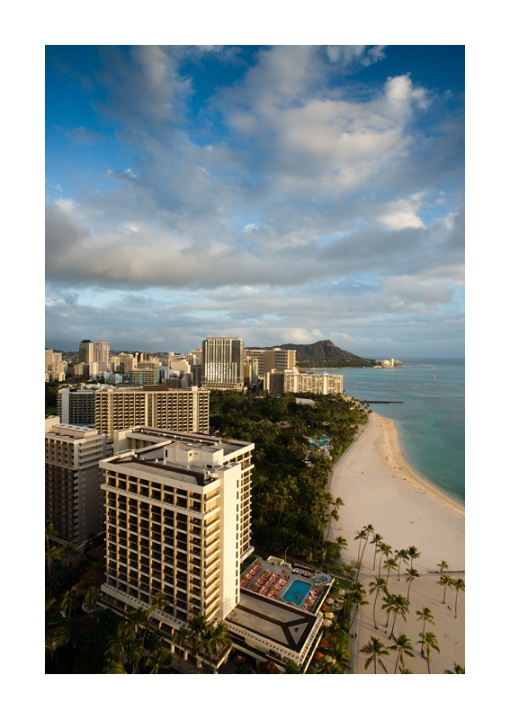
Clouds drift over Waikiki Beach and downtown Honolulu. Shot with a Sony a900 and a Sony SAL 20mm. Image exposed at ISO 100 at f16 for 1/6 of a second. Lenswas fitted with a Singh-Ray 2-stop split neutral density.

This is one of my favorite views of Waikiki Beach. The image was shot at twilight about 30 minutes after the sun had set. This is the optimum time to get this kind of exposure where the sky is a deep, beautiful blue that compliments the city lights. In order to get a shot like this there are a few rules to follow:

1. Scout the Shot: This is something you hear a lot from photographers but its true. I have been to this location before and pre-visualized this exposure.

2. Know your Astronomy: What I mean here is know where the sun rises and sets and at what time.

3. Set up Early: Get to your location ahead of time. This gives you time to set up, compose, figure out what filters you might need, watch the light, and take test exposures.

4. Be There: Shots like this happen everyday but you have to be there. Galen Rowell said there are only so many sun rises and sunsets. Get out and shoot.

To capture this kind of shot you need to wait till the sky and cityscape reach an equal EV, generally around 5. This means if you took a spotmeter reading on the sky and the city and the reading was approximately 5 you are ready to go. This generally occurs approximately 30 minutes after sunset. The exposure will typically be 45 seconds to a minute. The result is a beautiful cerulean sky complimenting the orange lights. I also set the color balance to about 4800 to 4900.

Image 2 was shot approximately 50 minutes before the twilight shot. This is why you get to your location early so you can capture the light on your subject as it changes.

Mahalo from Hawaii.

Bob

Diamond Head Sunset

Storm clouds clear over the ocean. Shot with a Sony a900 and a Sony SAL 20mm lens. Exposed at ISO 100 at f16 for 2 seconds. Image shot with a Heliopan Polarizer and a 3-stop Singh-Ray split neutral density.

So you are probably wondering about all these Diamond Head shots. Well its very picturesque and it happens to be the view from my room. This shot was made at sunset. The light was pretty flat and blocked by the expansive cloud cover but a small hole opened up for about a minute spreading light into the landscape.

I used a Singh-Ray 3-stop split neutral density filter to account for the difference in contrast between the sky and landscape. Additionally I used a Heliopan warming polarizer to accentuate the clouds. The light was beautiful.

Unfortunatley I made a major mistake in that I forgot to reset my camera from the days shooting and shot this as a high res JPEG. Not an end of the world mistake but one that does not leave me a lot of headroom to manipulate the file. The JPEG rendering from the Sony proved to be quite good though so all is not lost. So this is just a reminder to all to make sure you check your camera settings prior to a shoot.

Whirly Gigs

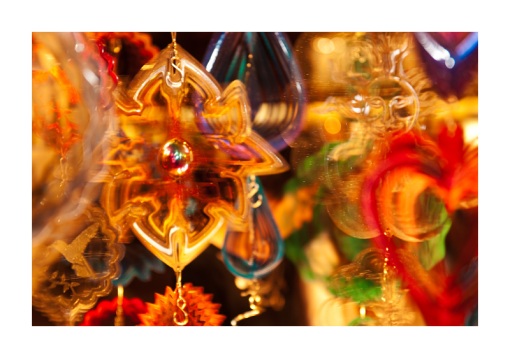
Image 1: Whirly Gigs in Waikiki. Shot with a Sony a900 and Zeiss 24-70mm lens at 70mm. Image exposed at ISO 100 at f2.8 for 1/8 second. Flash set for TTL High Sync Mode, bounced off ceiling.

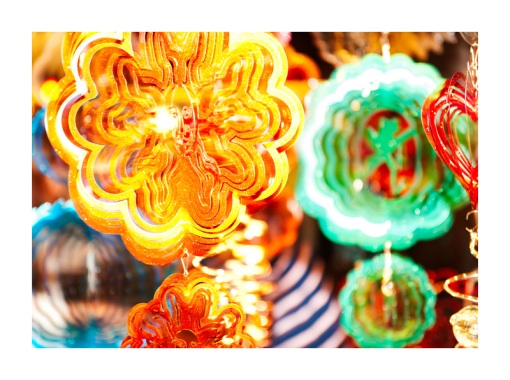
Image 2: Whirly Gigs in Waikiki. Shot with a Sony a900 and Zeiss 24-70mm lens at 70mm. Image exposed at ISO 100 at f2.8 for 1/8 second. Flash set for TTL High Sync Mode, bounced off ceiling.

Image 3: Whirly Gigs in Waikiki. Shot with a Sony a900 and Zeiss 24-70mm lens at 70mm. Image exposed at ISO 100 at f2.8 for 1/8 second. Flash set for TTL High Sync Mode, bounced off ceiling.

I found a street vendor in Waikiki selling Whirly Gigs. A breeze was blowing off the ocean and they were really moving. The colors were amazing and I saw an opportunity to create a kind of abstract photographic painting. The vendors cart had some nice light but I used a flash unit set to Manual Mode with High Speed Sync and Rear Sync to add a little more light and to freeze some of the whirly gigs. The flash was aimed up to bounce the light off the inside ceiling of the cart. While in Manual Mode I experimented with the light output and finally settled on a 1/4 flash output so I avoided blowing out the image. 

This is the kind of shot where you can experiment and every shot will be different. I looked for compositions of color and size and shape within each shot. The three I posted today I really like bor their color, vibrance, and motion. They just might be next years Christmas Cards.

Though each RAW shot was full of color on capture I used Lightroom’s color sliders to help bring out the color details. All that was required in Photoshop was a little curves work and very light sharpening.

Bob

Hawaiian Hula

Image 1: Hawaiian Hula, Waikiki. Shot with a Sony a900 and a Sony SAL 70-300mm at 300mm. Image exposed at ISO 100 at f5.6 for 1/60 second. Flash set to TTL and High Speed Sync.

Image 2: Hawaiian Hula, Waikiki. Shot with a Sony a900 and a Sony SAL 70-300mm at 300mm. Image exposed at ISO 100 at f5.6 for 1/60 second. Flash set to TTL and High Speed Sync.

While on my nightly walks through Waikiki I ran across a hula company performing along the beach. I stayed to watch and shot a few images.

Since I arrived late I could not get a front row position to shoot and unfortunately ended up standing behind the musicians. In a case like this you have to look for opportunities and deal with the hand you were dealt. I found a gap between the musicians and waited for the dancer to move into position.

Having the longer lens here was a plus. I wanted to freeze the motion as much as possible so I set the flash to TTL and High Speed Sync so I could play with the shutter speed a bit. I put the lens at the lowest aperture to blur the background.

The images were shot RAW and processed in Adobe Lightroom and Photoshop.

Thanks for stopping by.

Bob

Chris Sebo

Chris Sebo, artist. Shot with a Sony a900 and a Sony SAL 70-300mm lens at 70mm. Image exposed at ISO 100 at f5.6 for 1/2 second. Flash exposure set to Rear Sync.

Chris Sebo laying down a run of paint on a new work of art. Shot with a Sony a900 and a Sony SAL 70-300mm lens at 70mm. Image exposed at ISO 100 at f5.6 for 1/2 second. Flash was set for Rear Sync.

This is artist Chris Sebo at work on the streets of Waikiki. An amazing artist, Chris creates his paintings using ordinary spray paint. I had the opportunity to spend a little time watching Chris and he graciously allowed me to shoot a few images.

He works incredibly fast, blending his colors across the canvas using cardboard, crumpled newspaper, bottle caps and brushes to create paintings that are other-worldly.

To capture the dynamic way he paints I used a flash unit set to TTL Mode and Rear Sync. The combination of Rear Sync with a 1/2 second exposure allowed me to capture the motion.

To see Chris’s art go to www.seboart.com

Mahalo, Bob

Slot Canyon Glow

Image 1: The interior walls of Upper Antelope Canyon glow from sunlight penetrating from above. Shot with a Sony α900 and a Sony SAL 20mm lens. Image exposed at ISO 100 at f14 for 2 seconds.

Image 2: Reflected light reaching down into Lower Antelope canyon literally causes the walls to glow. Shot with a Sony α900 and a Zeiss 24-70mm lens at 28mm. Image exposed at ISO 100 at f14 for 2 seconds.

I was searching through some of my site statistics and noticed I had a request for the best lenses for shooting inside a slot canyon. So here are 2 images shot this year in Upper and Lower Antelope Canyon in April. At this time of the year the sun is rising higher in the sky and the light more fully penetrates into canyon. The first image was shot at 10:30 in the morning and the walls were glowing.

Slot canyons do come with some challenges including diminished light and narrow, almost claustrophobic space. Additionally, the light moves within the canyon as the sun passes overhead. Within minutes a once glowing wall will be plunged into shadow. My Sony 20mm f2.8 lens is one of my favorites for tight spaces. I also use a Zeiss 24-70 f2.8. The advantage in using the 24-70 is getting the wide angle view but having the flexibility to zoom in for more detail or to isolate an area. My exposures range from 1 to 2 seconds to well over a minute at ISO 100. To mitigate camera shake I recommend shooting in mirror lock-up mode. I shoot in manual mode: manual metering and manual focusing.

I have been asked about filters and I do not use them in the slots. For a shot like Image 1 I will increase the white balance to 6000 to accentuate the warmer colors. You can also achieve this effect by shooting with the shade color balance setting.

Image 2 was shot in Lower Antelope canyon in the early afternoon. This canyon is deeper and the light penetrates later than Upper Antelope. The effect here is other worldly. The canyon wall appeared to glow from within. Again no filters were used, only an adjustment with the white balance.

I would encourage anyone visiting the Page area to take the time to go to Antelope Canyon. If you do you can book your visit with Carol Bigthumb at Adventurous Antelope Canyon Photo Tours.

As far as equipment you will need a good wide angle such as a 20 or 28mm, and a medium range zoom can help isolate details. A tripod is a necessity. And flash is not allowed inside the canyons.  When you go please respect the canyon and your hosts. They are places of immense beauty and serenity. And perhaps if you are lucky, as the soft notes of a flute echo off the canyon walls you will feel the heartbeat of the place.

Bob

Sunset over Cadillac Mountain

Beautiful red clouds float over Cadillac Mountain, Acadia National Park. Shot with a Sony α900 and a Zeiss 24-70mm lens set to 24mm. The image was exposed at ISO 200 at f16 for 2 seconds. The RAW file was processed in Adobe LR and Photoshop.

Those of you who visit on a regular basis will notice a change in the design of the blog. This is a new template called Monochrome that was just added to the WordPress Theme Library. I think its a little more dramatic and helps frame the images. Let me know what you think.

Todays post was shot earlier this fall on Cadillac Mountain in Acadia National Park. I was visiting the park to do some survey work and wound up on the mountain in the late evening. The sun was just setting below the horizon off to image left and was subtly lighting up the the boulders. There was three stop difference between the foreground rocks and the sky. To hold the sky in check I used a Singh-Ray 3-stop, soft edge, split neutral density filter. I only had the red in the clouds for a few minutes before the light faded.

For more information on Acadia National Park please visit http://www.nps.gov/acad/index.htm

To see more Acadia images please visit my website at http://roberthclarkphotography.com

Bob

Waikiki Beach and Diamond Head.

Clouds drift over Waikiki Beach, Island of Oahu, Hawaii. Shot with a Nikon D300 and Nikor 12-24mm lens at 18mm. ISO 100, f14 at 1/25 of a second.

In anticipation of an upcoming trip to Oahu I am posting an image I shot early one morning on a previous trip. Sometimes you need to be resourceful and creative to get a shot. In this case I happened to be staying in a hotel that had wonderful views of Diamond Head. I discovered that the stairwell near my room had open window bays which meant I could set up a tripod and frame a nice shot. The sun rises to the image left and sets to the image right so I could have taken shot at either time. In this case I preferred the softer morning light I had this day plus the wonderful clouds over Diamond Head. Aloha!

Bob

Rocks and Lichen

Serrated slabs of sandstone covered in lichen, Zion National Park, Utah. Shot with a Nikon D300 and Nikkor 12-24mm lens at 24mm. The image was shot a f14 at ISO 100 for 1/25 of a second.

We have all heard the expression that at times “we cannot see the forest for the trees.” Well in photography sometimes it pays to take a moment to look at the trees. We can get so fixated on the grand vista or recording a scenic wonder that we fail to look more intimately at what lies before our feet. This image is a case in point. I was struggling with a shot of the Watchman in Zion National Park when I just took a breather to clear my thoughts. It was a that point that I saw this incredible layered rock covered in multi-colored lichen. Beautiful light allowed the rock fins to glow. If I had not taken that moment to just be in the landscape I would have missed this wonderful composition.

For more information on Zion National Park go to http://www.nps.gov/zion/index.htm

Sunrise on Wukoki Pueblo

First light illuminates the Wukoki Ruin at Wupatki National Monument, Arizona. Shot with a Sony α900 and a Sony SAL 20mm lens, at f16 at 1/8 second

First light breaks on Wukoki Ruin, Wupatki National Monument. Shot with a Sony α900 and a Zeiss 24-70mm at 24mm, ISO 100, f16 at 1/2 second.

Today’s image was shot at Wupatki National Monument in Arizona. Located between Flagstaff, Arizona and Cameron along Highway 89, Wupatki preserves the ruins of red sandstone pueblos built by farming Ancestral Puebloan People between 1120 and 1250. The Wukoki Pueblo is one of the best preserved sites and is sited on a small hill affording fantastic views towards the San Francisco Peaks.

This picture is all about scouting and pre visualizing the shot. I knew where the sun would rise and was looking for a position to capture the light as it first broke across the ruin. I spotted the slabs of stone and realized there was an open position underneath that could form a shooting window that would frame the ruin. I arrived well before sunrise and positioned the camera in the alcove of sandstone. As sunrise approached I took several test exposures to be sure of my exposure and composition. As the sun rose and started to light the ruin the inner walls of the sandstone fins began to glow as well, a surprise I did not expect. It was a truly beautiful sunrise that morning. I imagined the ancients would have agreed with me. For more information on Wupatki National Monument please visit www.nps.gov/wupa/

Design a site like this with WordPress.com
Get started